
As Top Passive Income Streams takes center stage, this opening passage beckons readers with casual formal language style into a world crafted with good knowledge, ensuring a reading experience that is both absorbing and distinctly original.
In today’s economy, finding ways to generate income without constant effort is becoming increasingly important. Passive income offers a solution to this challenge, allowing individuals to earn money without actively working for it. In this discussion, we will explore the top passive income streams that can help you secure a more stable financial future.
Passive Income
Passive income is income that is earned with little to no ongoing effort required from the individual receiving it. This is in contrast to active income, which is earned through regular employment or a traditional business where time and effort are directly exchanged for money.
Examples of Passive Income Streams
- Dividend income from stocks and investments
- Rental income from real estate properties
- Royalties from intellectual property like books, music, or patents
- Affiliate marketing commissions
- Interest from savings accounts or bonds
Benefits of Generating Passive Income
Generating passive income offers several advantages:
- Financial independence: Passive income can provide a steady stream of money without the need for constant work, allowing individuals to achieve financial freedom.
- Diversification: By having multiple passive income streams, individuals can spread their financial risk and create a more stable income source.
- Flexibility: Passive income can be earned from anywhere and at any time, offering flexibility in terms of work location and schedule.
- Scalability: Passive income streams have the potential to grow over time, allowing individuals to increase their earnings without a proportional increase in effort.
Top Passive Income Streams
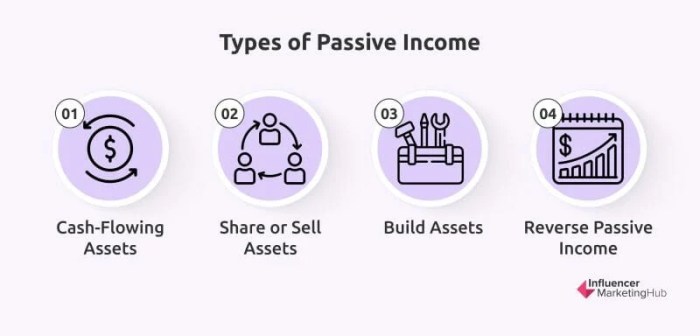
Passive income streams are a great way to generate additional income without actively working for it. Let’s explore some of the top passive income streams and how they compare in terms of potential returns and risks.
Dividend Stocks
Investing in dividend stocks involves buying shares of companies that pay out dividends to their shareholders. These dividends are a portion of the company’s profits distributed to investors. The potential returns from dividend stocks come from both the dividends received and the potential growth in the stock price. However, there are risks involved, such as fluctuations in the stock market and the possibility of a company reducing or eliminating its dividends.
Rental Properties
Owning rental properties can be a lucrative passive income stream. By renting out properties, you can generate a steady stream of rental income. The potential returns from rental properties include rental income, property appreciation, and tax benefits. However, there are risks such as property damage, vacancies, and dealing with difficult tenants.
Affiliate Marketing
Affiliate marketing involves promoting products or services and earning a commission for every sale made through your referral. The potential returns from affiliate marketing come from commissions earned on successful referrals. The risks are relatively low compared to other passive income streams, but success depends on factors such as traffic, conversion rates, and the quality of products being promoted.
Tips for Diversifying Passive Income Streams
Diversifying your passive income streams is essential for long-term financial stability. By spreading your investments across different income streams, you can reduce risk and ensure a more consistent income. Some tips for diversification include:
- Investing in a mix of high and low-risk assets
- Exploring different industries and markets
- Building multiple streams of income to create a diversified portfolio
Dividend Stocks
Investing in dividend stocks is a popular way to generate passive income. When you invest in dividend-paying companies, you receive a portion of the company’s profits in the form of regular dividend payments. This can provide a steady stream of income without the need for active involvement in the day-to-day operations of the business.
Dividend Yield and its Importance
The concept of dividend yield is essential for investors looking to build a passive income portfolio. Dividend yield is calculated by dividing the annual dividend payment by the stock price, expressed as a percentage. A higher dividend yield indicates a higher return on investment.
- Dividend yield allows investors to assess the income potential of a stock relative to its price.
- Investors often look for stocks with a consistent track record of paying dividends and increasing them over time.
- High dividend yield can be attractive, but investors should also consider the sustainability of the dividend payments.
Research and Selection of Dividend-Paying Stocks
When researching and selecting dividend-paying stocks for a passive income portfolio, investors should consider several factors:
- Company stability and financial health: Look for companies with strong balance sheets and cash flows to support dividend payments.
- Dividend history: Consider the company’s track record of paying dividends and whether they have consistently increased them over time.
- Industry and sector trends: Evaluate the industry and sector dynamics to ensure the company’s future growth prospects and sustainability of dividend payments.
- Dividend payout ratio: Assess the company’s dividend payout ratio to determine if it is sustainable and leaves room for future growth and investment.
Rental Properties
Investing in rental properties is a popular way to generate passive income. By purchasing a property and renting it out to tenants, you can earn a steady stream of income each month. However, there are important factors to consider to ensure long-term profitability and success in property management.
Earning Passive Income through Rental Properties
- Choose the right location: Location is key when it comes to rental properties. Look for areas with high demand for rentals and low vacancy rates.
- Calculate expenses: Consider all expenses such as mortgage payments, property taxes, insurance, maintenance costs, and property management fees to determine the potential profitability of the investment.
- Set competitive rent prices: Research the rental market in the area to set rent prices that are competitive yet profitable.
Factors to Consider when Investing in Rental Properties
- Market conditions: Analyze the current real estate market and economic trends to make informed decisions on when and where to invest.
- Property condition: Inspect the property thoroughly to assess its condition and any potential repair or renovation costs.
- Tenant screening: Screen potential tenants carefully to ensure they are reliable and able to pay rent on time.
Tips on Property Management
- Maintain open communication with tenants: Respond promptly to any maintenance requests or concerns raised by tenants to ensure a positive relationship.
- Regular property inspections: Conduct regular inspections to identify any maintenance issues early on and address them promptly.
- Stay updated on landlord-tenant laws: Familiarize yourself with the laws and regulations governing landlord-tenant relationships to avoid legal issues.
In conclusion, diversifying your income sources through various passive income streams can provide long-term financial stability and security. By understanding the different options available and implementing strategies to maximize returns while managing risks, you can create a robust financial portfolio that works for you even when you’re not actively working. Take charge of your financial future today by exploring the world of passive income streams and unlocking new possibilities for financial growth and independence.
Question Bank
How can I start generating passive income?
To start generating passive income, you can consider investing in dividend stocks, rental properties, or exploring affiliate marketing opportunities. It’s important to research each option carefully and choose the ones that align best with your financial goals and risk tolerance.
Are passive income streams truly passive?
While passive income streams require initial effort to set up, they have the potential to generate income with minimal ongoing involvement. However, it’s important to periodically review and manage these streams to ensure they continue to perform effectively.
Is it necessary to diversify passive income streams?
Yes, diversifying passive income streams is essential for long-term financial stability. By spreading your income sources across different streams, you can reduce risk and ensure a more consistent revenue flow even if one stream underperforms.


